
Introduction
The aim of the race control box is to have a simple setup that can enable races to be up and running very quickly. The box contains everything needed to run a race. This is the second iteration of the case based on feedback from the users.
Description
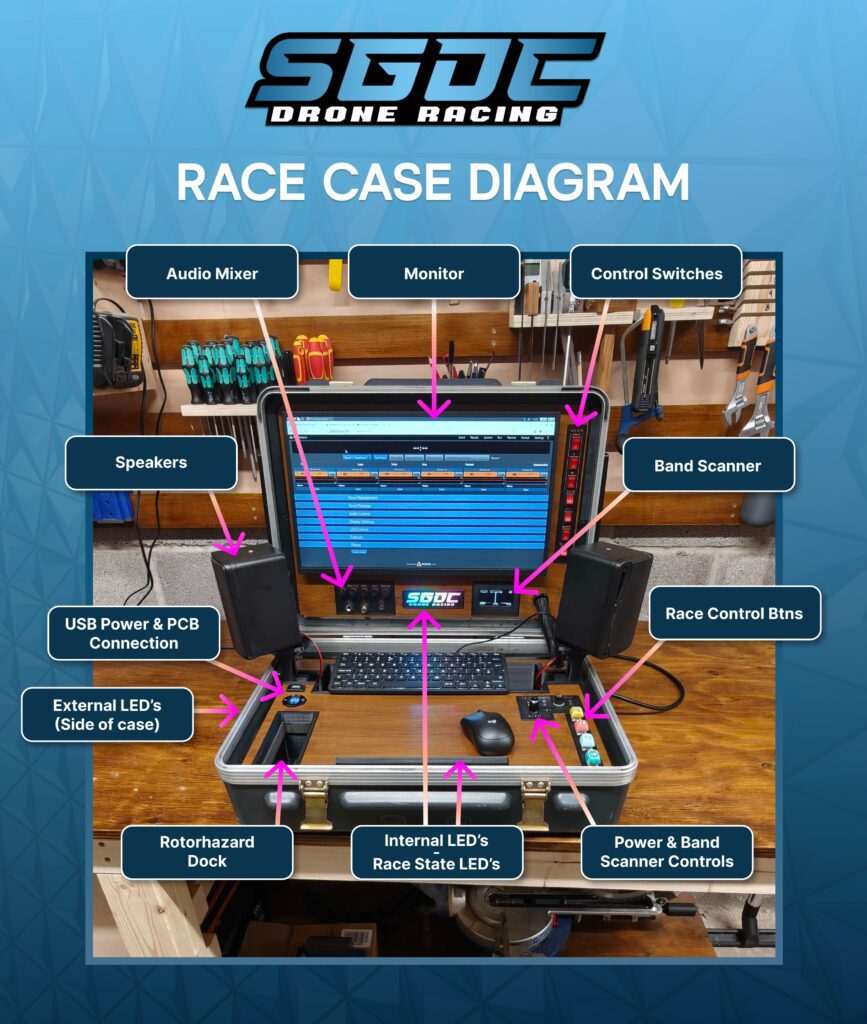
The box contains the following:
- Raspberry pi computer with mouse and keyboard
- 300W 12V amplifier and speakers
- 4 channel mixer with master volume control
- A chromecast audio to allow streaming music
- 4G router
- Race control buttons for advance, schedule race, stop race, call out pilot names
- USB power and voltage monitor
- Switch panels to control main power and turn certain parts on and off
- Output connectors that include audio output, DC output (12V) and USB connection to the PC
- A 10A mains to 12V adapter
- A Rotorhazard to HDZero OSD transmitter
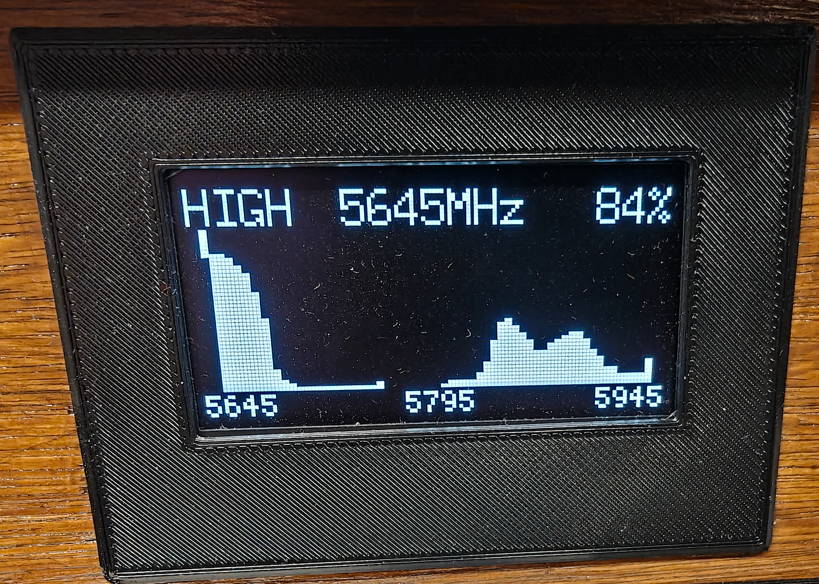
- A band scanner
Things to Watch out for
- The lid is heavy lower it down gently and watch out for wires going over the edge of the lip and is will cut through them.
- Make sure all mating connectors and adapters are removed before closing the box
- When moving or storing the box be careful of the external connectors and lighting to avoid damage. It is best to not store the box on its end for this reason.
- If you plan to use MultiGP make sure the router is switched on before the lap timer (otherwise it will time out when trying to connect to the internet
- DO NOT store tall things like the plug or mouse directly under the screen as they will damage it
- Be careful of the anti-roll bar if moving the box around on the bench
Usage
Connections
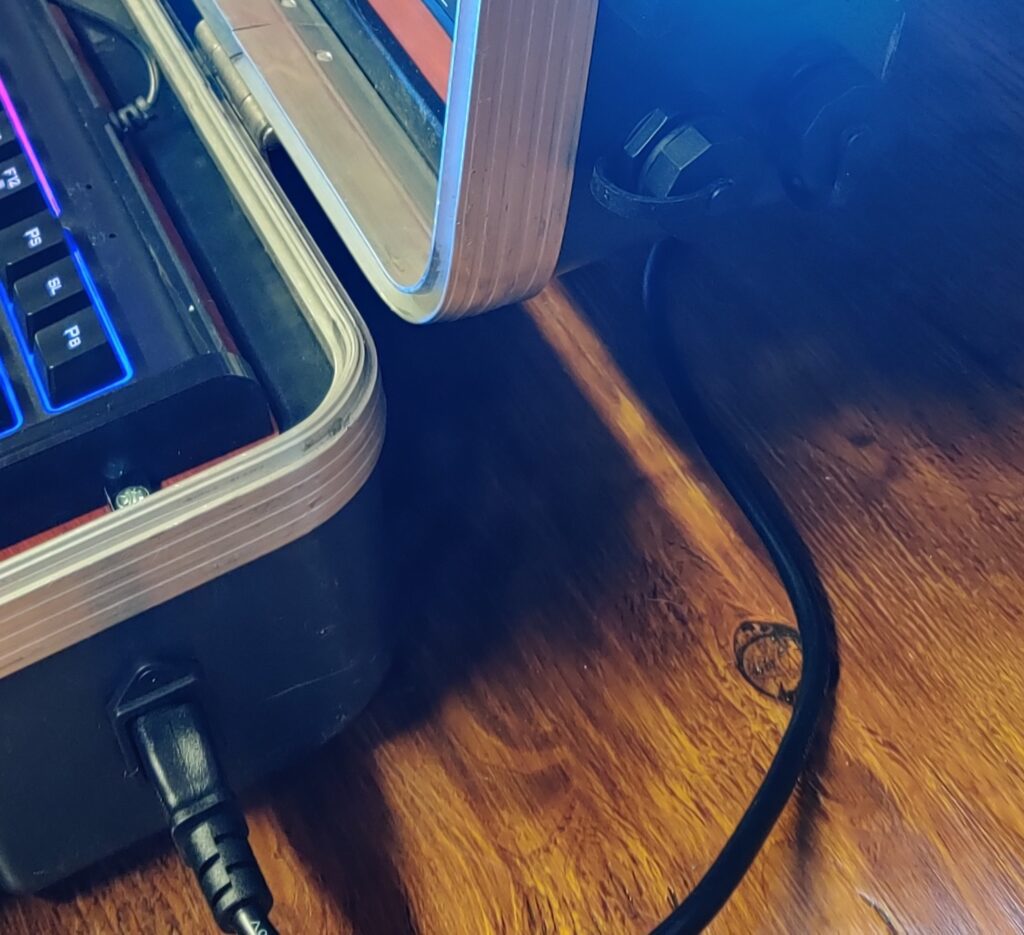
Set the box on a table surface open it up and connect power, either mains in the connector on the side or 12V battery (3S lipo) in the connector on the power panel.
The anti-roll bar will automatically deploy when you open the case.
Fold out the speakers and slide them to the end of the runner if you wish to use the internal speakers
Switch on the main power to allow the router to boot and connect to the internet
Place the timer by the gate and attach the antenna mount to the gate or run the ethernet cable to it. Supply power to the timer (3S to 6S battery) at this time.
Power Panel
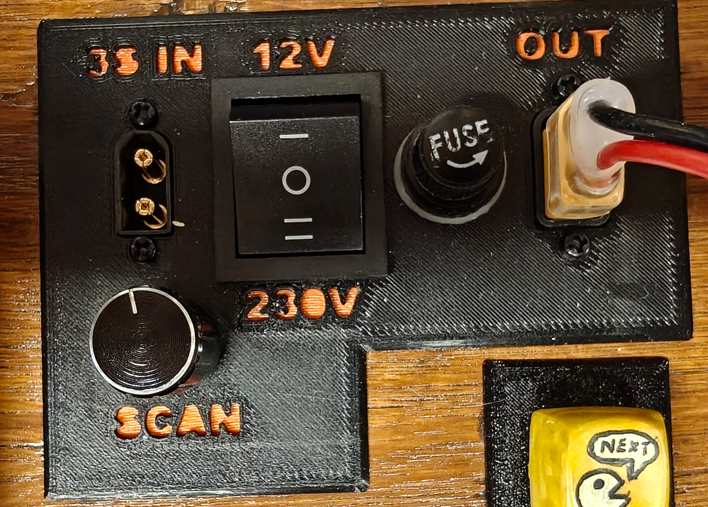
The power panel controls main power to the case and the band scanner menu controller, it has the following:
- 3S IN - Power input for a 3S (12V) power input, only use a 3S battery on this input (10.5V to 12.6V) anything outside of this voltage range may cause damage
- Main power switch to change between 12V - off - mains
- Fuse - A 10A slow blow 5x20mm fuse
- A 12V output port for chargers or running other equipment. Don't pull more than about 3 A as this will pull the case main voltage rail down when on mains. You can check case voltage on the USB charger screen.
- SCAN dial - This is a rotary dial and push button that controls the band scanner
Switch Panel
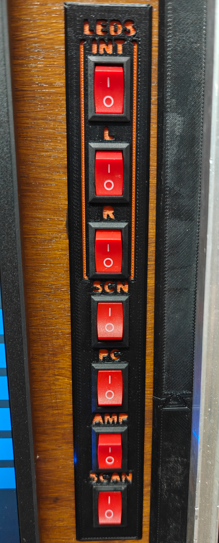
The switch panel contains the following switches:
- LEDs INT - Turns the internal LED's on and off
- LEDs L - Controls the left LED's
- LEDs R - Controls the right LED's
- SCN - Turns the main screen on and off
- PC - Turns the internal raspberry pi PC on and off
- AMP - Turns the amplifier on or off
- SCAN - Turns the band scanner on and off
The following is powered on all the time once the main power switch is on
- the 4G router
- The audio mixer
- The chromecast audio
The PC will power the following when it is switched on
- The SGDC logo LED's
- The Rotorhazard to HDZero OSD hardware
- Keyboard and mouse
Mixer Panel
The mixer controls the volume of 4 inputs and has a main volume out, the dials do the following:
- MAIN - Is the main output volume from the mixer
- PC - Controls the volume of the timing PC output
- Music - Controls the volume of the chromecast audio output
- IN1 & IN2 - Controls the volume of the IN1 & IN2 input jacks on the switch panel
To use the chromecast audio connect to the WiFi and then you will have the option to stream from music apps like Spotify or Google music. You should also be able to cast your whole phone screen
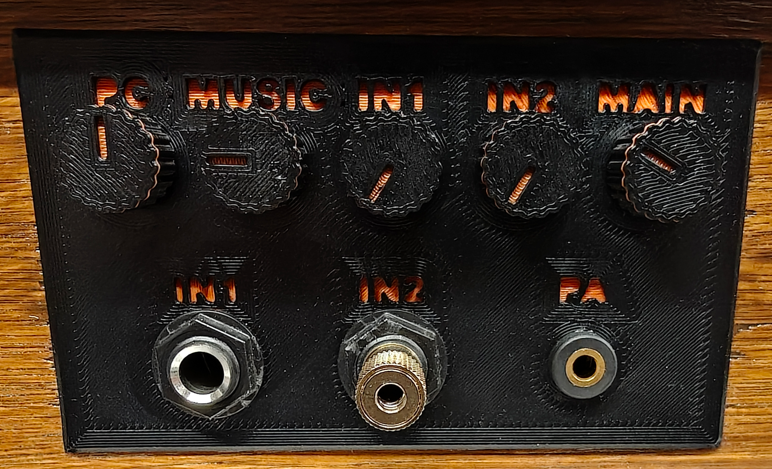
IN1 & IN2 - These audio inputs connect to IN1 and IN2 on the mixer, this allows you to connect things like laptop, phone or microphone. The connector is a 6.35mm stereo jack but should have a 3.5mm adapter in each.
Note that if you connect a device to IN1 & IN2 and also into the USB charging ports you will create a ground loop which will prevent the sound output
The PA 3.5mm socket is an un-amplified output to connect to the PA system or other audio speaker system.
USB Charger & PC USB
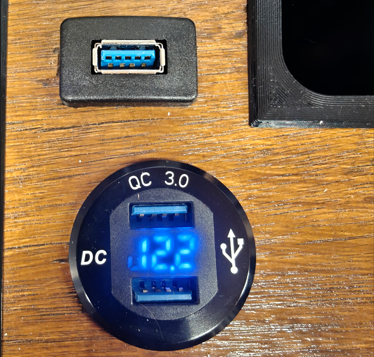
The USB charger can charge two USB devices, note the 3A limit mentioned on the DC output above should take into account these outputs
The charger has a voltage display that shows the voltage of the main power so lipo voltage can be monitored.
There is a USB connector to the pi to allow things like mice of cameras to be connected
Computer
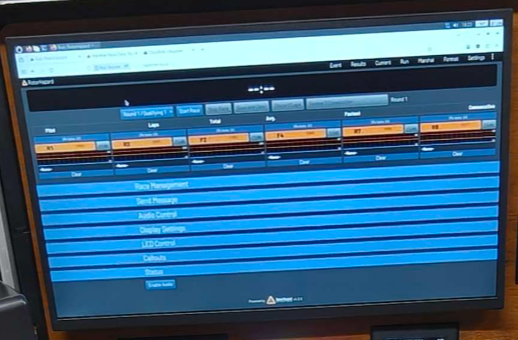
The computer is a Raspberry pi 4, it will boot up automatically and open the browser connection to the laptimer when it boots up.
The computer has a mouse and keyboard.
It is probably best to shut the computer down before turning off but it should be ok to remove power as the PC has its system files protected.
Temperature an CPU usage are show in the top right of the screen
Switches for the monitor control can be found on the right hand side of the monitor to adjust monitor settings
Race Control Keys
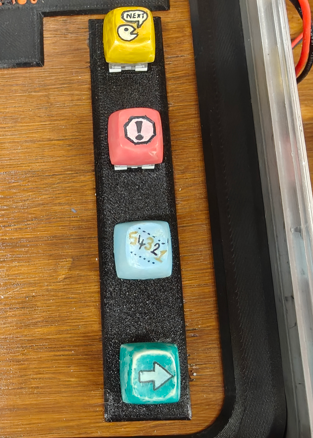
There are 4 race control keys that work when the timer is on the run page on the PC from bottom to top the keys do the following:
- Advance race - Start race, stop race, save and clear race
- Schedule race - Starts the scheduled race countdown to give you time to sit down
- Stop race - Stops the race
- Call out - Calls out the pilots up next
The above buttons simulate a keyboard so it is important to make sure you don't have a typing dialogue open as you will enter letters into associated with the above shortcuts
Band Scanner
The band scanner will show a scan of the 5.8 GHz bandwidth we use. You can use it to see if there is interference or if quads are powered up or not.
The SCAN dial on the power panel lets you move the selector, a short press changes to scan low band (signified by it saying LOW top left) whilst a long press exits to the main menu
SGDC LED Logo
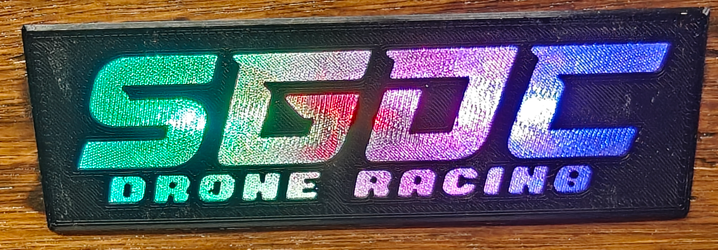
The SGDC LED logo changes based on race state. The PC in the case needs to be on for them to illuminate
Initial colour is yellow. Rainbow signifies the timer has completed it's first connection to the case or the timer is idle. Then yellow, green and red signify staging, racing or race complete
Anti-Roll Bar
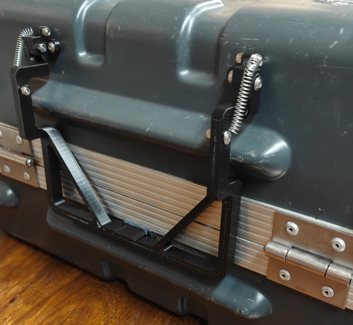
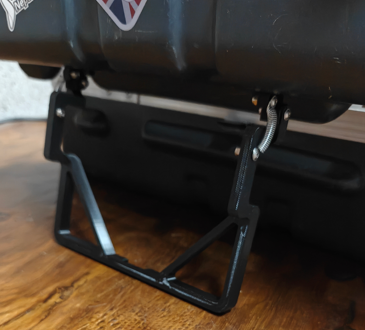
The anti-roll bar prevents the case from doing back flips when open in the wind. The anti roll bar is designed to automatically deploy when you open the case to prevent people forgetting to do it.
When you close the case you will need to push it back down into its retaining clip for storage.
Try not to drag the anti-roll bar around when moving the case around on the table as this could damage it. If you need to move the case it is best to tilt the top part forwards slightly so the anti-roll bar is not touching the table
Packing Up the Case
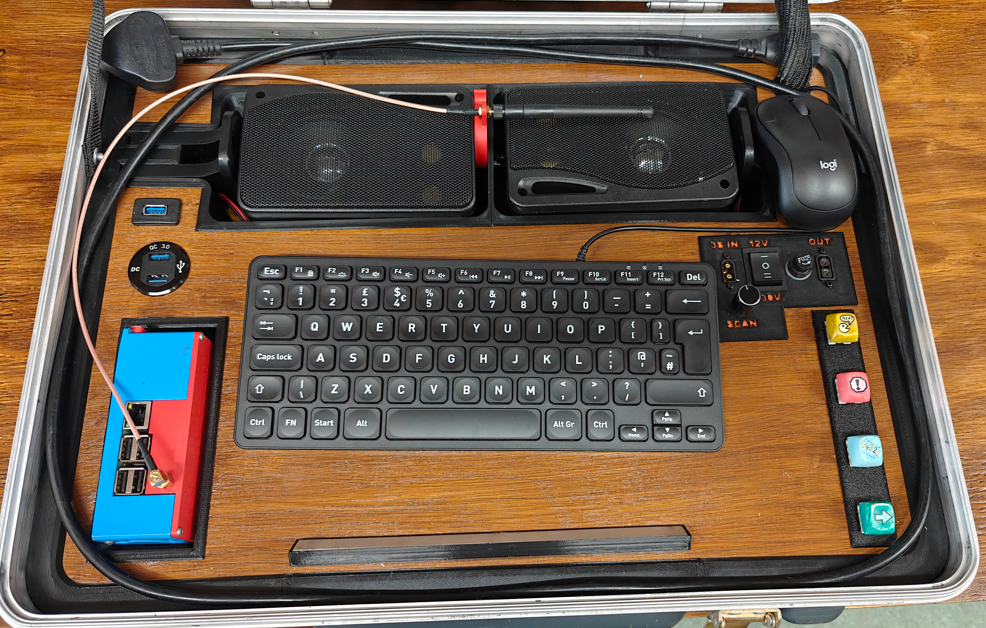
The screen is quite exposed in this case and so it is important to take care when packing up the case. The suggested placement for power cable, antenna cable mouse and keyboard can be seen above.
Close the case slowly if you are unsure and look in the side to check the screen is clear.
The antenna bracket fits beside the speaker in the case
Make sure there are no wires stuck out the edge of the case when you close it as this will damage the cables
Connection Information
To connect your device to the system you can either use the Ethernet ports or connect via WiFi. Your device will need to work on 5.8 GHz. The connection info is:
- SSID: RaceControl
- Password: <See sticker on Race control box>
- To connect to the laptimer interface you can use the address laptimer.local
- The chromecast name is Race Control Music
Power Consumption
If you are running the box on battery this section may help you decide what to have switched on. Add up all the things you have switched on to get an estimate of power usage.
| Apparatus | Power Usage |
| Main power only on | 5 W (0.42 A @ 12 V) |
| PC | 5.6 W (0.47 A @ 12 V) |
| Screen | 8.4 W (0.7 A @ 12 V) |
| Internal LED | 2.4 W (0.2 A @ 12 V) |
| 1 side LED | 2.5 W (0.21 A @ 12 V) |
| Band scanner | 1.2 W (0.1 A @ 12 V) |
| Amplifier & speakers on no sound | 3.8 W (0.32 A @ 12 V) |
| Amplifier & speakers moderate sound | 8 W (0.67 A @ 12 V) |
| Everything on moderate sound | 34 W (2.89 A @ 12 V) |